Case Studies/Marco Dal Maso
Ecommerce CRO · Shopify · Luxury

A beautiful store that whispered when it should have spoken

Marco Dal Maso is an Italian luxury jewelry brand with strong photography and a premium identity, but key product pages were underperforming. We redesigned the buying journey through a CRO-first lens to increase purchase confidence and reduce decision friction.

Marco Dal MasoLuxury jewelry · Shopify DTC (Italy)
PDP + Cart
Rebuilt for conversion
Trust
Reassurance near the buy
Mobile-first
Sticky add-to-cart
Conversion-focused redesign
Add to cart
Made in Italy · Secure · Klarna
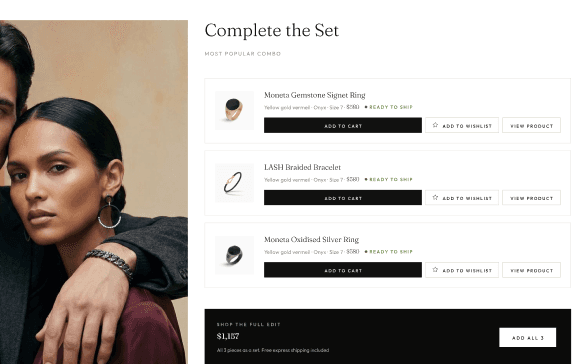
Complete the set
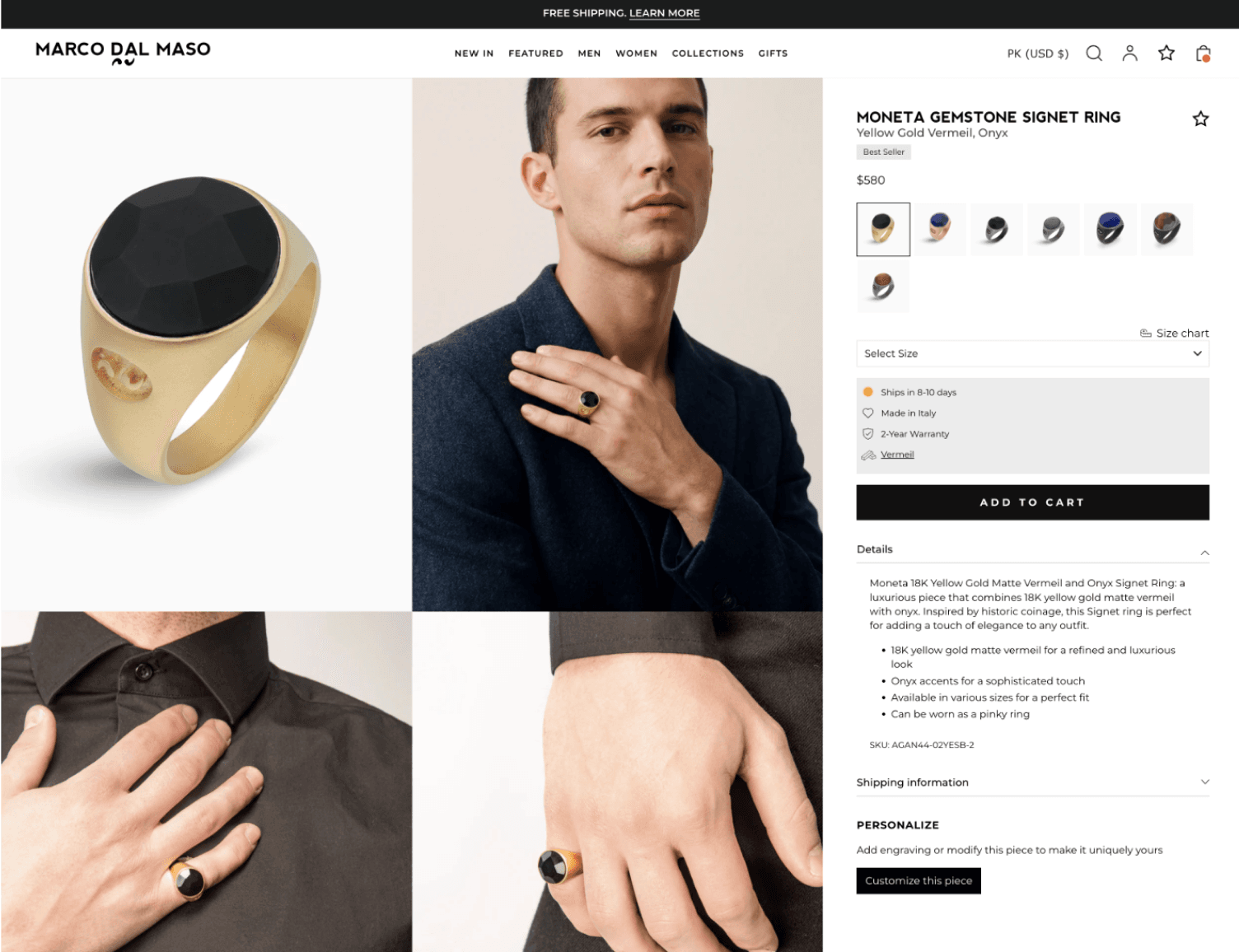
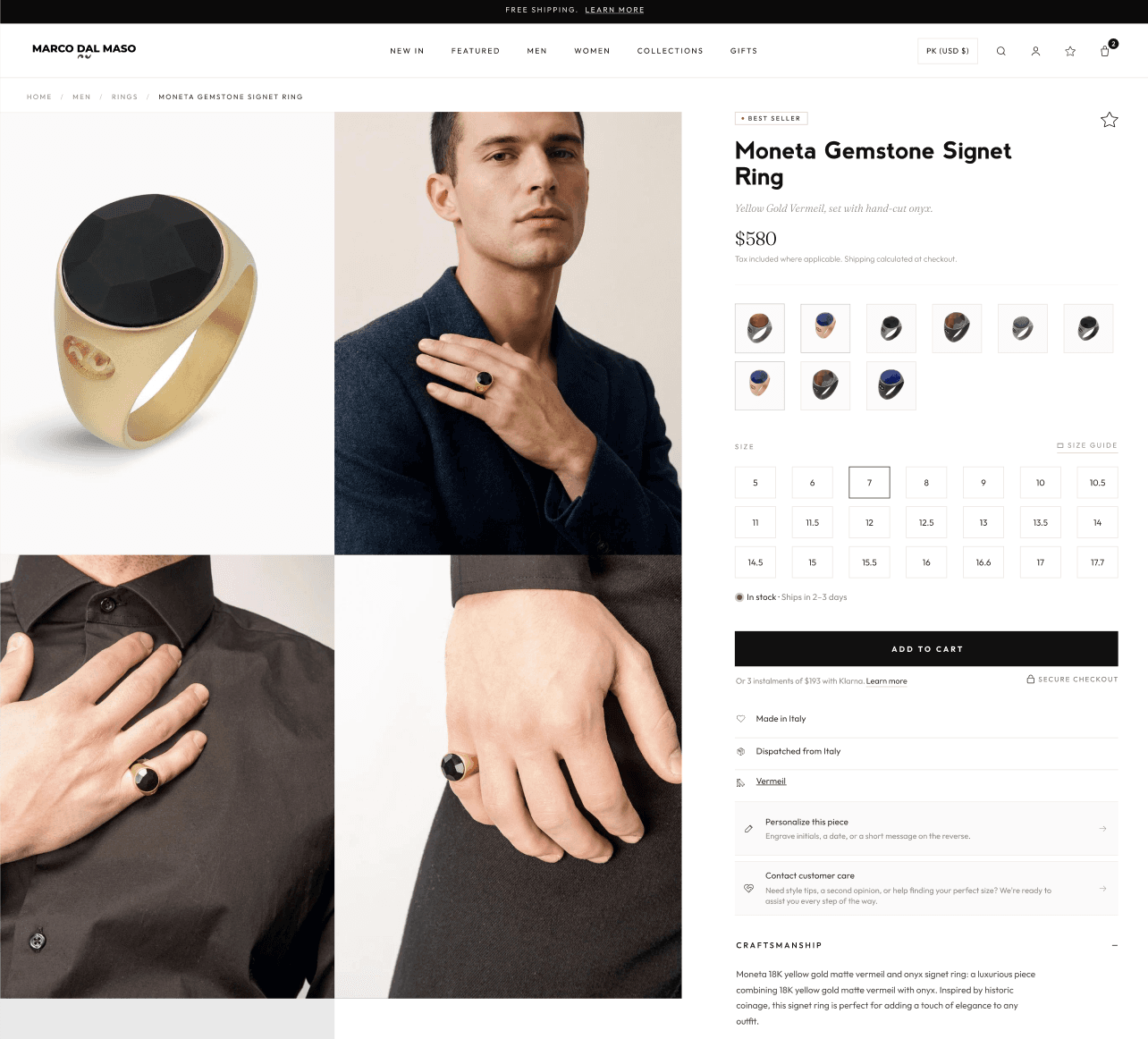
PDP
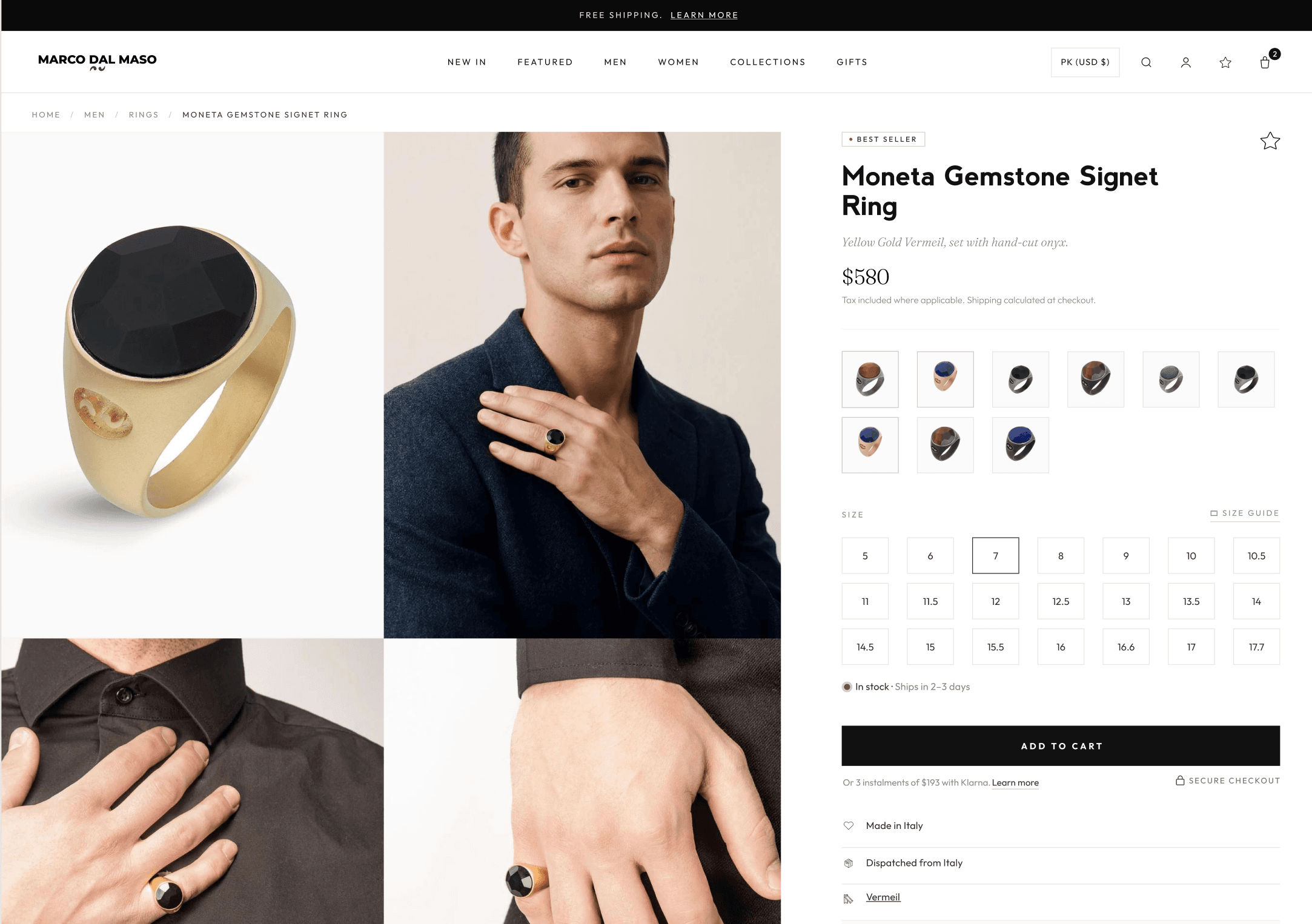
Rebuilt for decision-making
Cart
Utility to conversion layer
Mobile
Sticky add-to-cart + UX
Trust
Reassurance near the buy

Overview

A decision-making problem, not a traffic problem

Marco Dal Maso is an Italian luxury jewelry brand known for handcrafted sterling silver, premium materials, and distinctive craftsmanship. The brand already had a strong visual identity and excellent product photography.
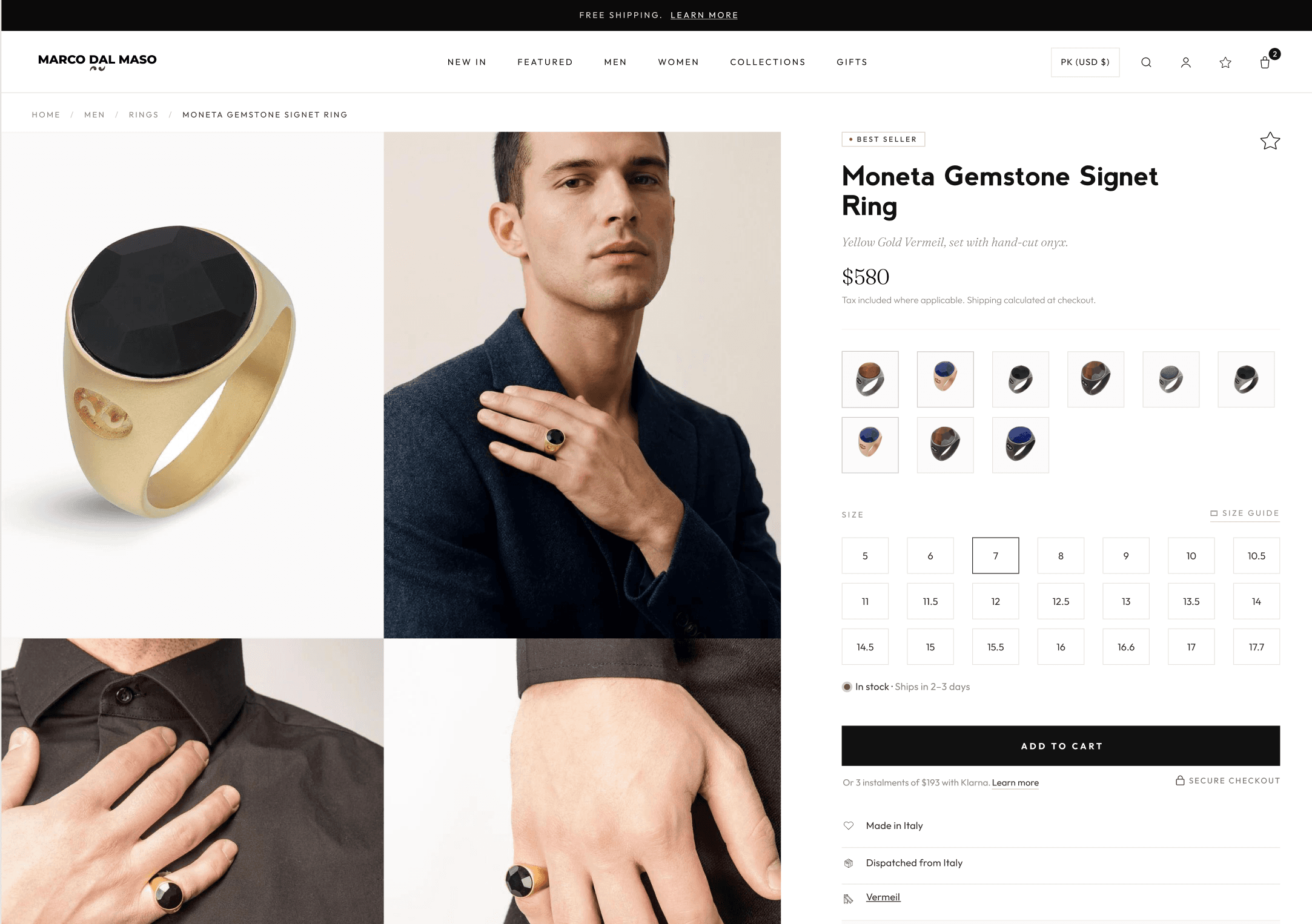
But the high-traffic product pages were underperforming and creating friction across the journey. The objective was clear: increase purchase confidence, reduce decision friction, and create a luxury buying experience that reflects the quality of the brand. We approached it CRO-first, combining UX strategy, customer psychology, and luxury ecommerce best practices.

Client at a glance

  • Luxury jewelry · Shopify DTC
  • Italy
  • Handcrafted sterling silver
  • Audience: premium, mobile-heavy buyers

What we delivered

UX & CRO auditProduct Detail Page redesignTrust & reassurance layerCart drawer CROCross-sell strategyMobile UX optimization

The Challenge

Strong interest, weak purchase intent

The challenge was not traffic, it was converting product interest into purchase intent. Internal analysis surfaced several opportunities across the buying journey.

PDP add-to-cart around 1.5%

High-traffic products were getting attention but generating limited purchases, with a PDP bounce rate reaching 73%.

Trust signals lacked visibility

Craftsmanship, shipping, returns, personalization, and payment options were not positioned close enough to the buying decision.

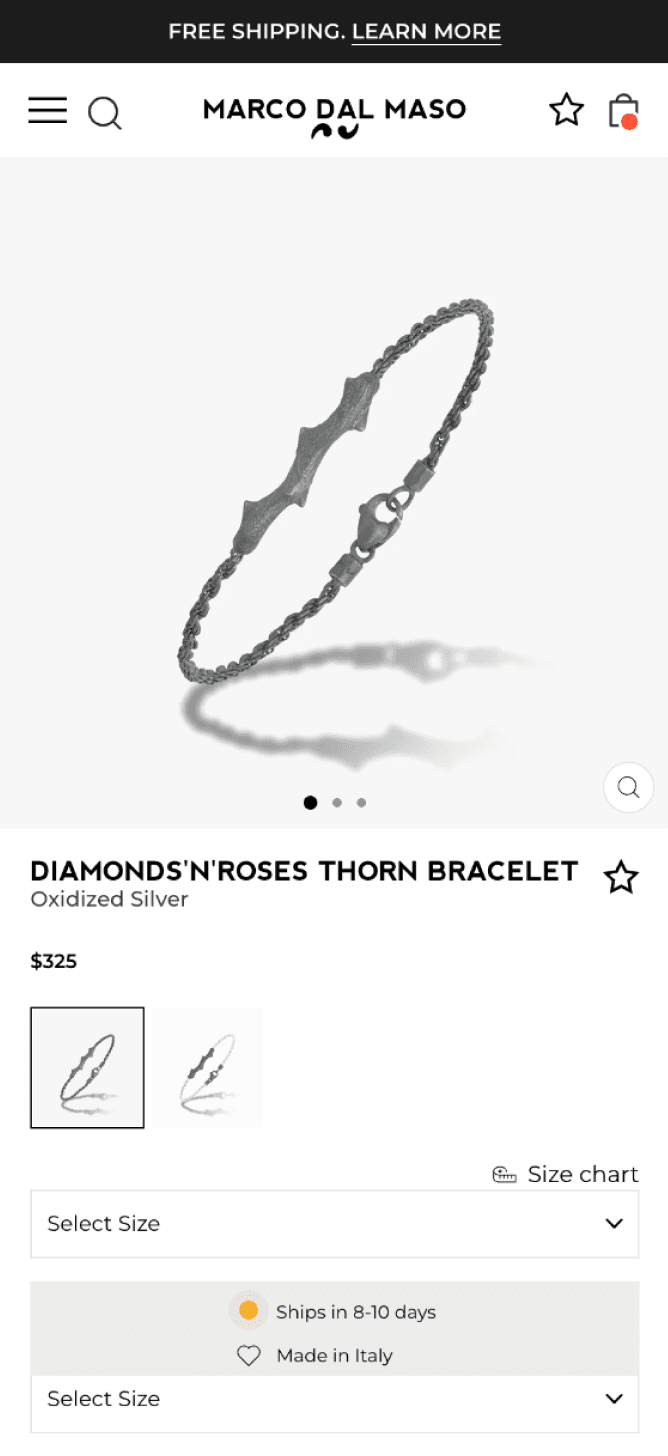
Variant selection created friction

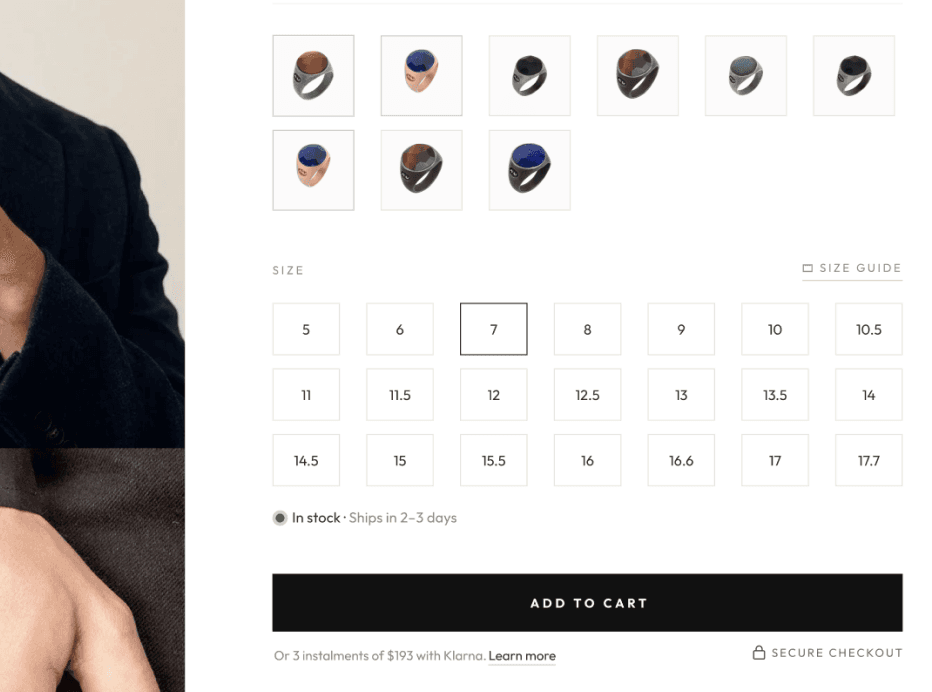
Size selection and product options lacked visual clarity and added unnecessary decision friction, especially on mobile.

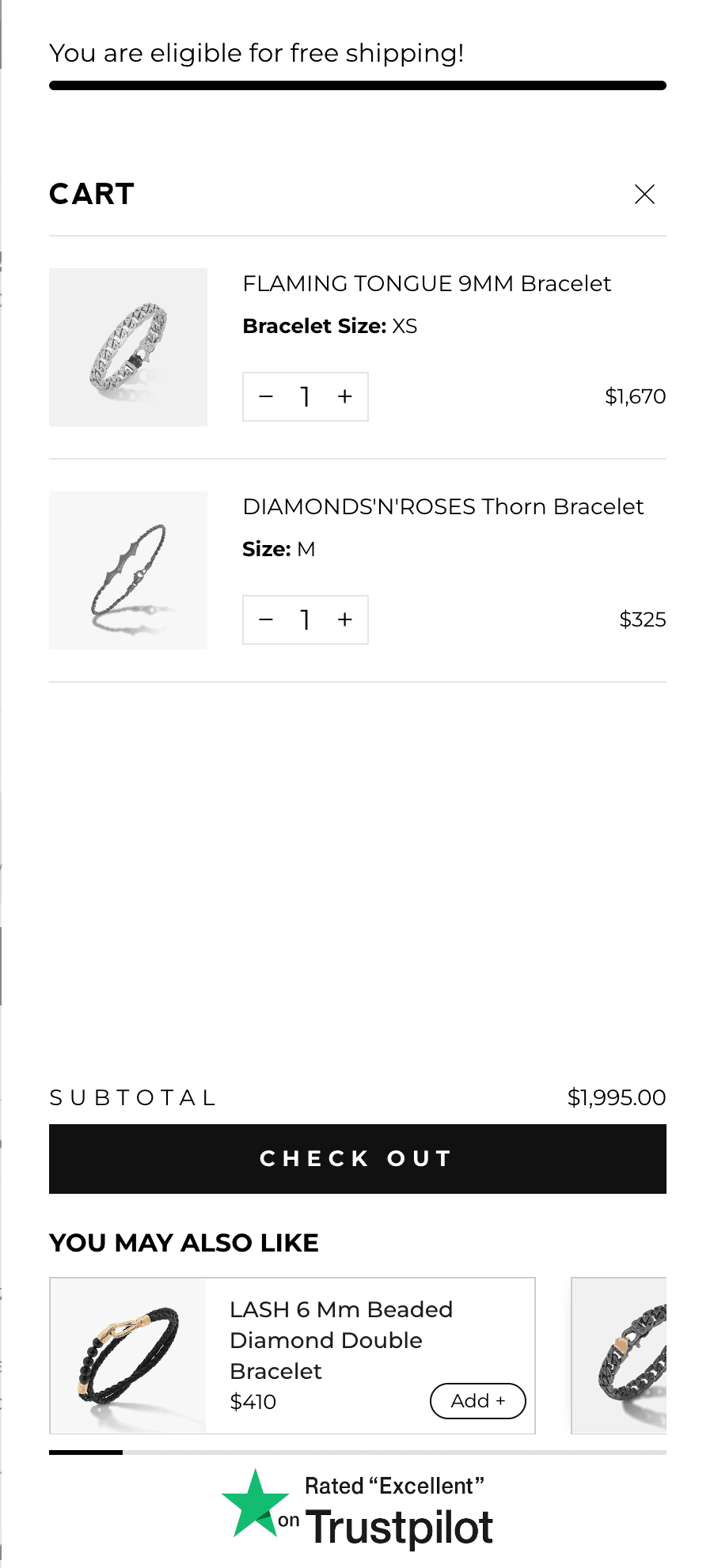
Cart was a utility, not a conversion tool

The cart drawer worked as a storage area, missing recommendations, express checkout visibility, and quick-shop opportunities.

CRO Audit & Research

We mapped the journey before opening Figma

We ran a UX and CRO audit across the homepage, navigation, product discovery, PDPs, mobile, cart drawer, trust signals, and recommendations, to identify every obstacle preventing customers from progressing toward purchase.

#1
Features over decision-making
PDPs held useful information, but customers had to work too hard to answer key purchase questions.
#2
Trust signals lacked visibility
Craftsmanship, shipping, returns, and payment reassurance were not close to the buying decision.
#3
Variant selection friction
Sizing and options lacked visual clarity and introduced unnecessary friction.
#4
Product discovery underused
Customers had limited exposure to complementary products and styling opportunities.
#5
Cart missed conversions
The cart served as storage, not a conversion-focused experience.

The CRO roadmap

Audit
PDP redesign
Trust layer
Storytelling
Cross-sell
Cart & mobile

The Redesign

Redesigned for decision-making, not just aesthetics

Every component was rebuilt around three principles: increase purchase confidence, reduce decision friction, and increase product discovery. We moved the PDP from an information layout to a guided buying experience.

01

PDP above-the-fold

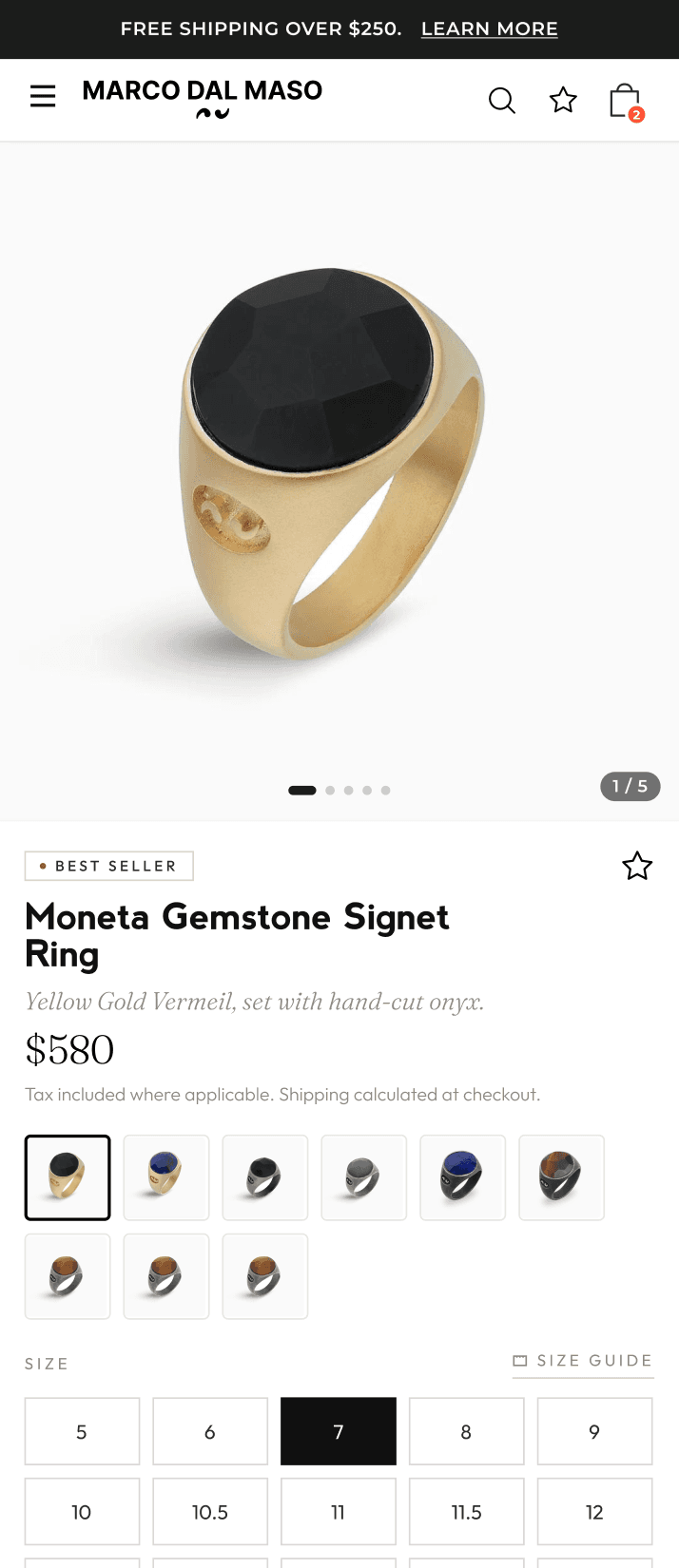
Reworked the hierarchy to prioritize purchase: larger imagery, clearer variant and sizing, stronger CTA visibility, and faster access to critical information.

02

Trust & reassurance layer

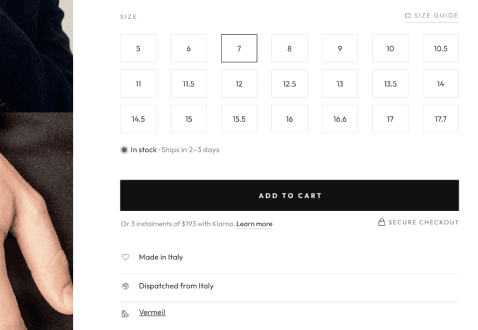
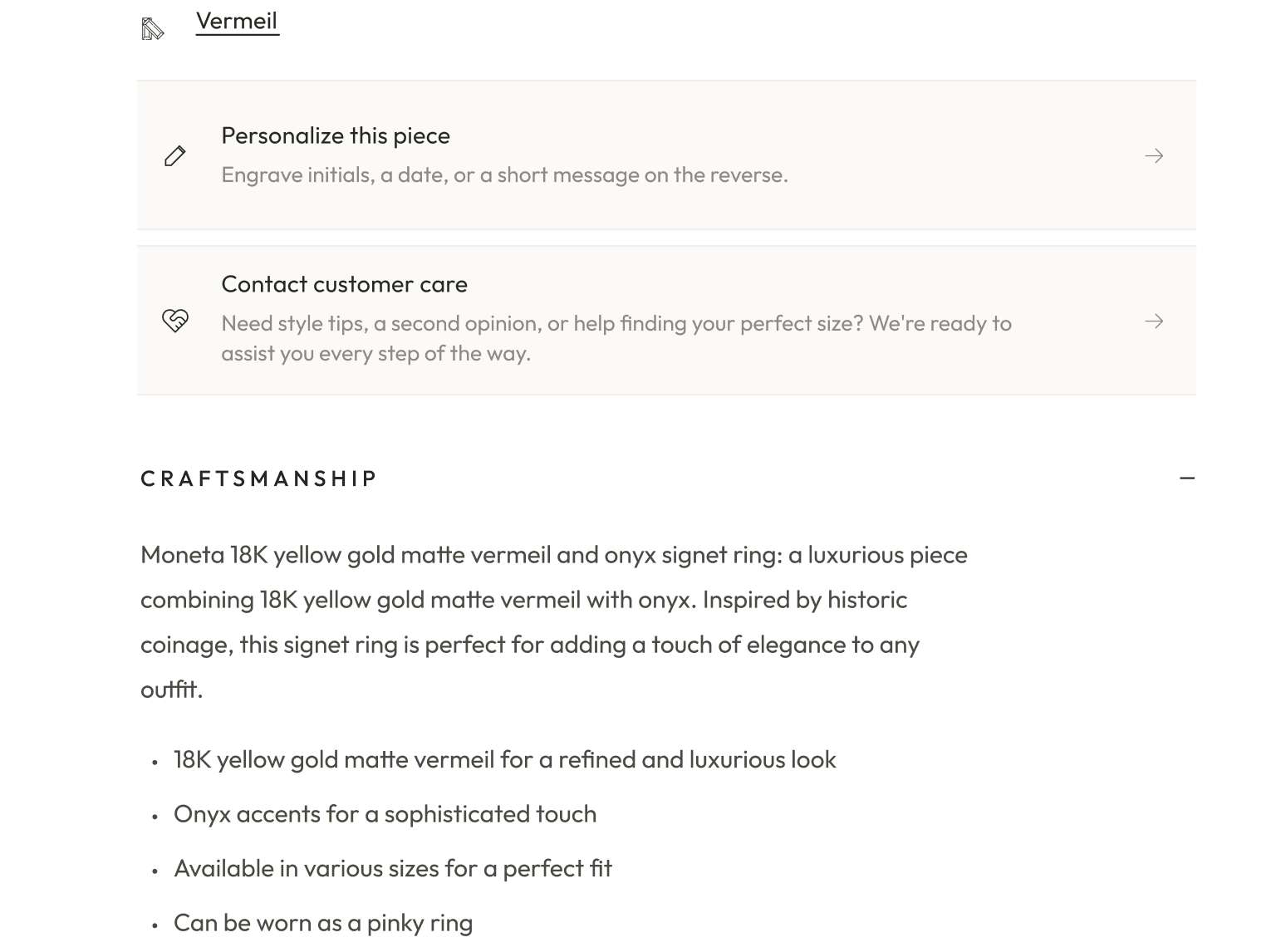
Repositioned Made in Italy, secure checkout, Klarna financing, shipping, returns, craftsmanship, and personalization directly around the buying decision.

03

Luxury storytelling

Transformed information-heavy pages into experiences communicating craftsmanship, heritage, materials, personalization, and product value.

04

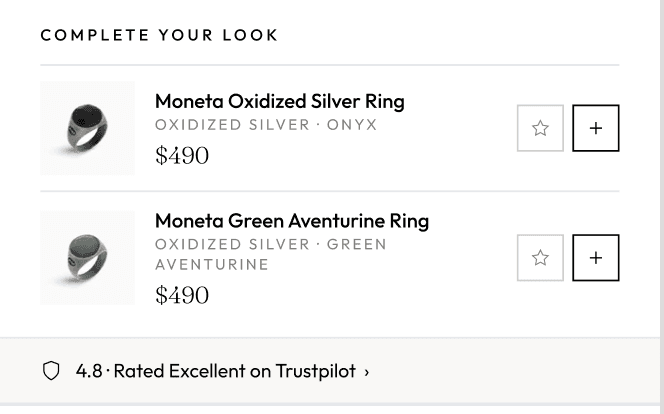
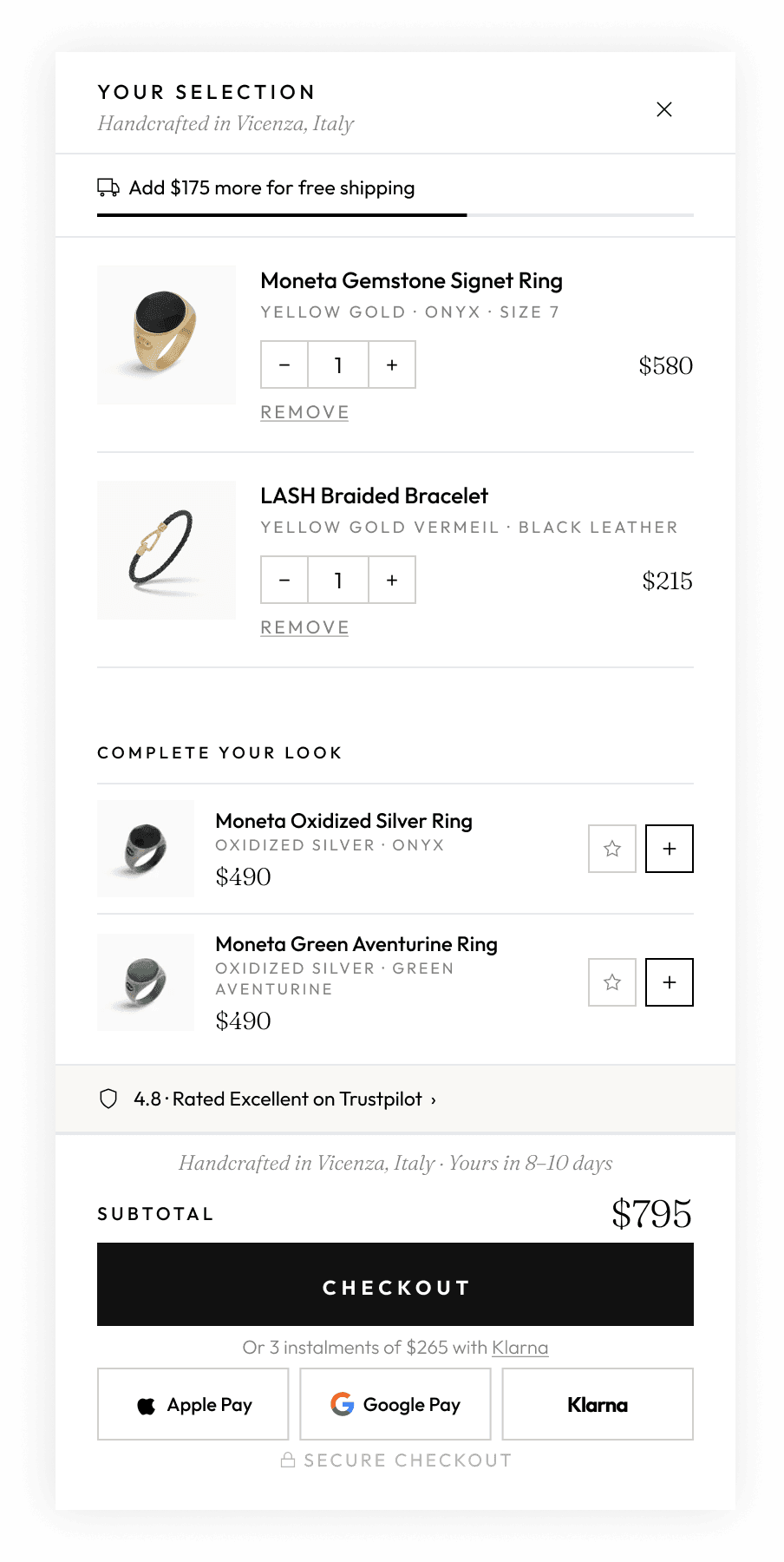
Complete the set (cross-sell)

Integrated recommendations into the buying journey to encourage basket building, styling inspiration, and natural product discovery.

05

Cart drawer CRO

Turned the cart from a utility into a conversion layer: product visibility, wishlist, quick shop, Klarna and express checkout emphasis, and empty-cart recovery.

06

Mobile experience

Redesigned key interactions for mobile buyers: sticky add-to-cart, better size selection, improved touch interactions, and reduced scrolling friction.

Discover
Trust
Decide
Add to cart
Checkout

Event-driven and orchestrated in the cloud: every step independently observable, retryable, and parallel.

Key Improvements

Every decision served a business objective

Rather than redesigning for appearance alone, each change was made to support measurable goals across the luxury buying journey.

Increased purchase confidence

Reassurance (Made in Italy, craftsmanship, shipping, returns, secure checkout, Klarna) became part of the purchase experience instead of something to hunt for.

Reduced purchase friction

Simplified variant and size selection, product hierarchy, and personalization for a smoother path from discovery to add-to-cart.

Stronger product discovery

Cross-sell and recommendations were repositioned to support decisions, with Complete the Set and better merchandising.

Luxury storytelling, aligned to value

Greater emphasis on craftsmanship, materials, heritage, and personalization, so the digital experience reflects the premium product.

Common Questions

What this project shows

The store already looked premium. The problem was beneath the surface: weak hierarchy, hidden trust signals, and friction in sizing and cart. We redesigned for decision-making, so every change targeted purchase confidence and friction, not just aesthetics.

Beautiful products that aren't converting?

If your store looks premium but the product pages do not convert, the gap is usually purchase confidence and friction, not design polish. Let's find it.

Free CRO teardown
No commitment
Response within 24 hours